
AI is becoming part of almost every industry, and jewelry design is no exception.
Today, many jewelry sellers are using AI tools to create jewelry images, explore new product ideas, and communicate design concepts more quickly. Tools such as Midjourney, DALL·E, Stable Diffusion, Adobe Firefly, Canva AI, and Ideogram can generate beautiful jewelry visuals from simple text prompts.
For jewelry sellers, AI can be a useful creative tool. It lowers the barrier to early-stage design exploration and helps sellers turn rough ideas into visual references much faster.
But there is one important question:
Can AI-generated jewelry designs be produced directly?
From a jewelry manufacturer’s point of view, the answer is usually:
AI jewelry designs can be used as design inspiration, but they should not be treated as production-ready jewelry designs.
AI can create beautiful images, but it does not truly understand jewelry structure, material strength, stone sizes, accessory sourcing, production methods, real costs, or the difference between digital visual effects and physical products.
For jewelry sellers, the real question is not whether AI can create a beautiful jewelry image.
The real question is:
How can an AI-generated jewelry design become a real product that can be produced, sold, and delivered to customers?
What Is AI Jewelry Design?
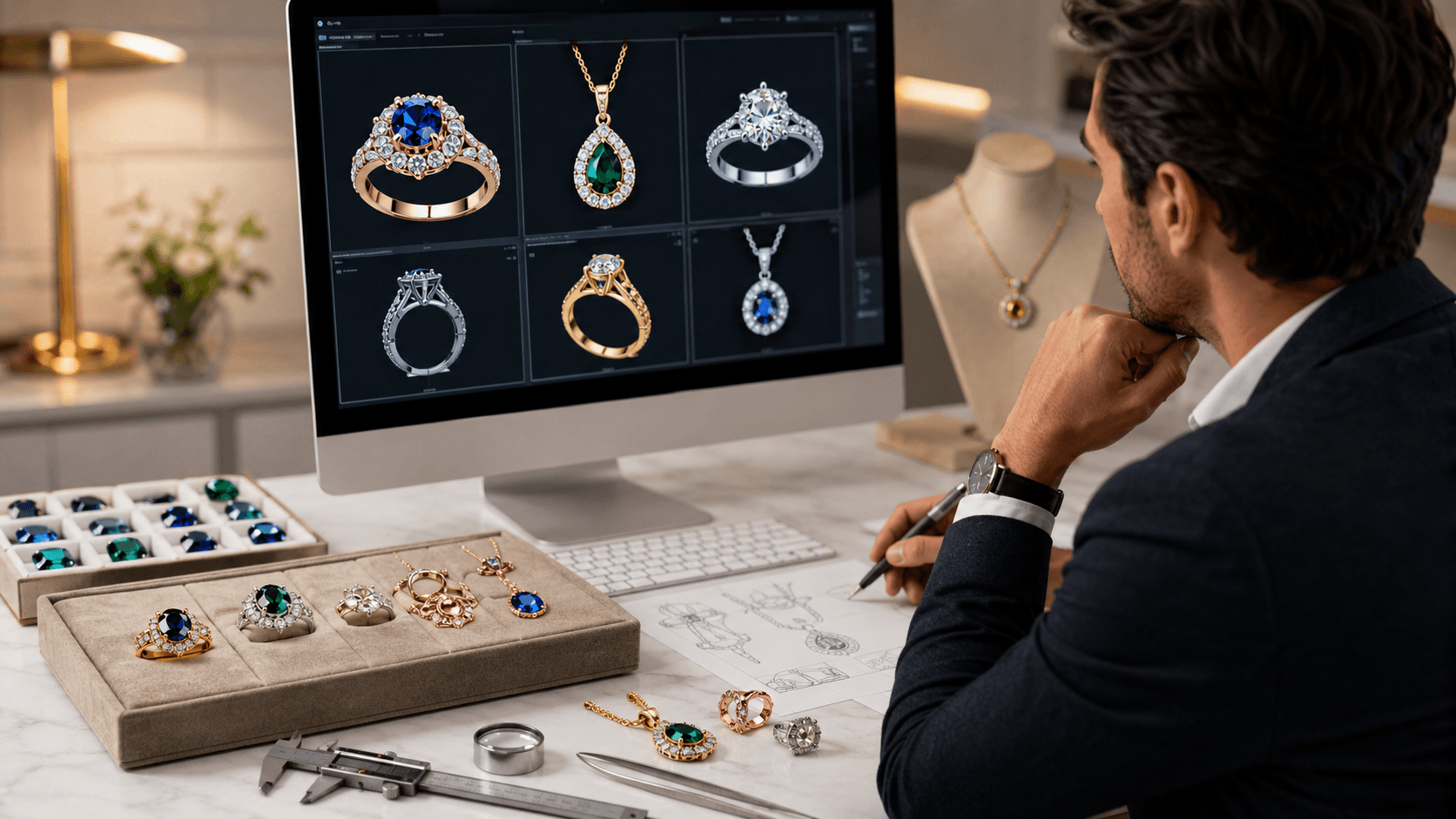
AI jewelry design usually refers to using AI image-generation tools to create jewelry concepts, style references, or visual design ideas.
AI image generation is part of AIGC, which stands for AI-Generated Content. It describes content created with the help of artificial intelligence, including text, images, videos, music, and other creative outputs.
AI image tools are trained on large amounts of image and text data. When users enter prompts such as jewelry type, gemstone color, material, design style, theme, or visual mood, the AI generates new images based on those descriptions.
For jewelry sellers, AI image generation has several advantages:
- Fast image creation
- Low design exploration cost
- Strong creative inspiration
- Large numbers of design variations
- Useful early-stage visual references
- Easier communication for sellers who cannot draw
For example, a seller can use AI to explore ideas such as:
- Vintage-style rings
- Rose gold pet memorial pendants
- Moon and star necklaces
- Gothic gemstone rings
- Three-tone gold family keepsake pendants
- Nature-inspired gemstone brooches
- Personalized birthday gift jewelry
These images can help sellers quickly explore style directions and communicate early concepts with customers, designers, or jewelry factories.
However, this is also where many problems begin.
A beautiful AI jewelry image does not mean the product is ready for production.
How AI Helps Jewelry Sellers
The biggest value of AI for jewelry sellers is that it makes design ideas easier to express.
In the past, sellers who could not draw had to rely on reference images, hand sketches, or professional designers to explain a jewelry concept. Now, they can use AI tools to generate visual directions much faster.
AI can help jewelry sellers:
- Explore product styles
- Test different design directions
- Visualize abstract ideas
- Show customers early references
- Improve early communication
- Build product series concepts faster
But AI does not replace the seller’s product evaluation.
Strong jewelry sellers are not successful simply because they can generate attractive images. They usually have their own customer positioning, brand style, product taste, and design direction.
AI can generate visual inspiration, but it cannot replace a seller’s understanding of the market, the customer, or the brand.
For jewelry sellers with their own design style and product concept, AI is not a replacement. It is a support tool.
It can help sellers express ideas faster, test visual directions, and explore design elements. But it should not replace real product evaluation, production knowledge, or brand positioning.
In other words:
AI should help jewelry sellers express their own design ideas, not limit them to random AI-generated images.
Why AI Jewelry Images Are Not Production-Ready
At Jewepiter, we often receive AI-generated jewelry images from customers who want to ask for pricing, sampling, or production.
The most common problem is not that the customer uses AI.
The real problem is that many customers do not have jewelry design or production experience. They want the manufacturer to copy the AI image exactly, without considering cost, structure, materials, or production feasibility.
Many AI jewelry images look beautiful at first glance. They may show rich gemstones, complex lines, dreamy structures, and luxurious visual effects.
But when a jewelry manufacturer reviews the image, the questions are very different.
A manufacturer needs to consider:
- Can the structure actually work?
- Can the stones be set securely?
- Is the thickness enough?
- Are the connection points strong enough?
- Can the chain, post, clasp, or other accessories be sourced?
- Are the stone sizes and shapes standard?
- Can the details be translated into 3D modeling?
- Is the material suitable for this design?
- Can the customer’s budget support this effect?
- Will the final product look close to the AI visual?
AI does not answer these questions.
That is why an AI jewelry image should be treated as a visual concept, not as a complete production drawing.
A production-ready jewelry design still needs structure evaluation, craftsmanship review, 3D modeling, cost calculation, and sample verification.
Can AI Jewelry Designs Be Produced?
Yes, some AI jewelry designs can be produced.
But in most cases, they cannot go directly from image to production.
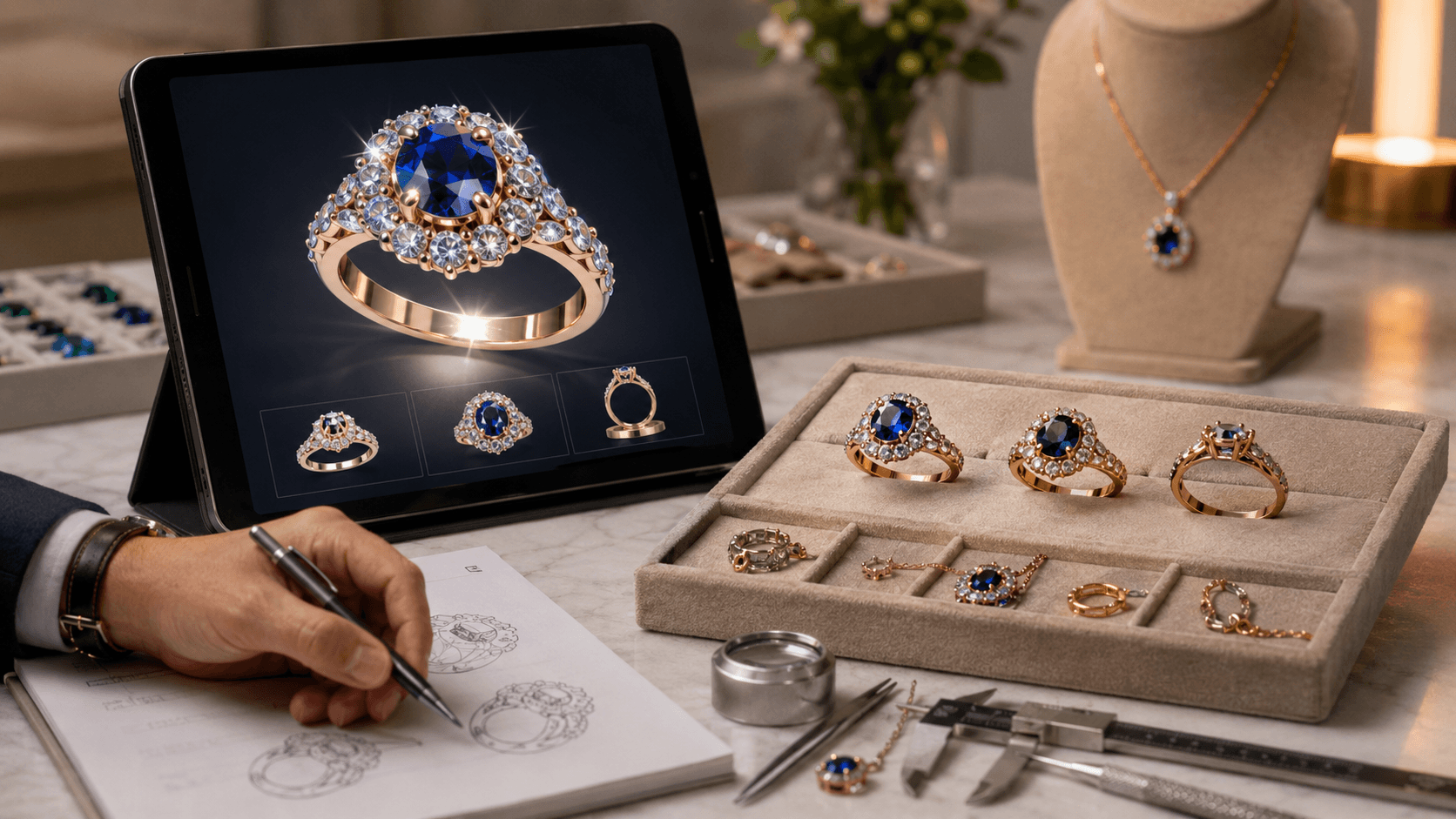
An AI jewelry image usually needs to go through several steps before it becomes a real jewelry product.
Step 1: Evaluate Production Feasibility
The first step is not quoting or 3D modeling.
The first step is to evaluate whether the design can actually be produced.
A jewelry manufacturer needs to check:
- Whether the overall structure is reasonable
- Whether there are unsupported or floating details
- Whether the stones can be fixed securely
- Whether the details are too complex
- Whether the patterns are clear enough
- Whether the thickness is sufficient
- Whether the chain, post, clasp, or connector can be sourced
- Whether the production method is realistic
Many AI jewelry images look attractive at first, but when you zoom in, the details may be unclear. Patterns may be merged together. Stone shapes may be inconsistent. Edges may not be clearly defined.
These issues can create problems during 3D modeling and production.
If the structure is not reasonable, the design cannot move directly into production, no matter how beautiful the image looks.
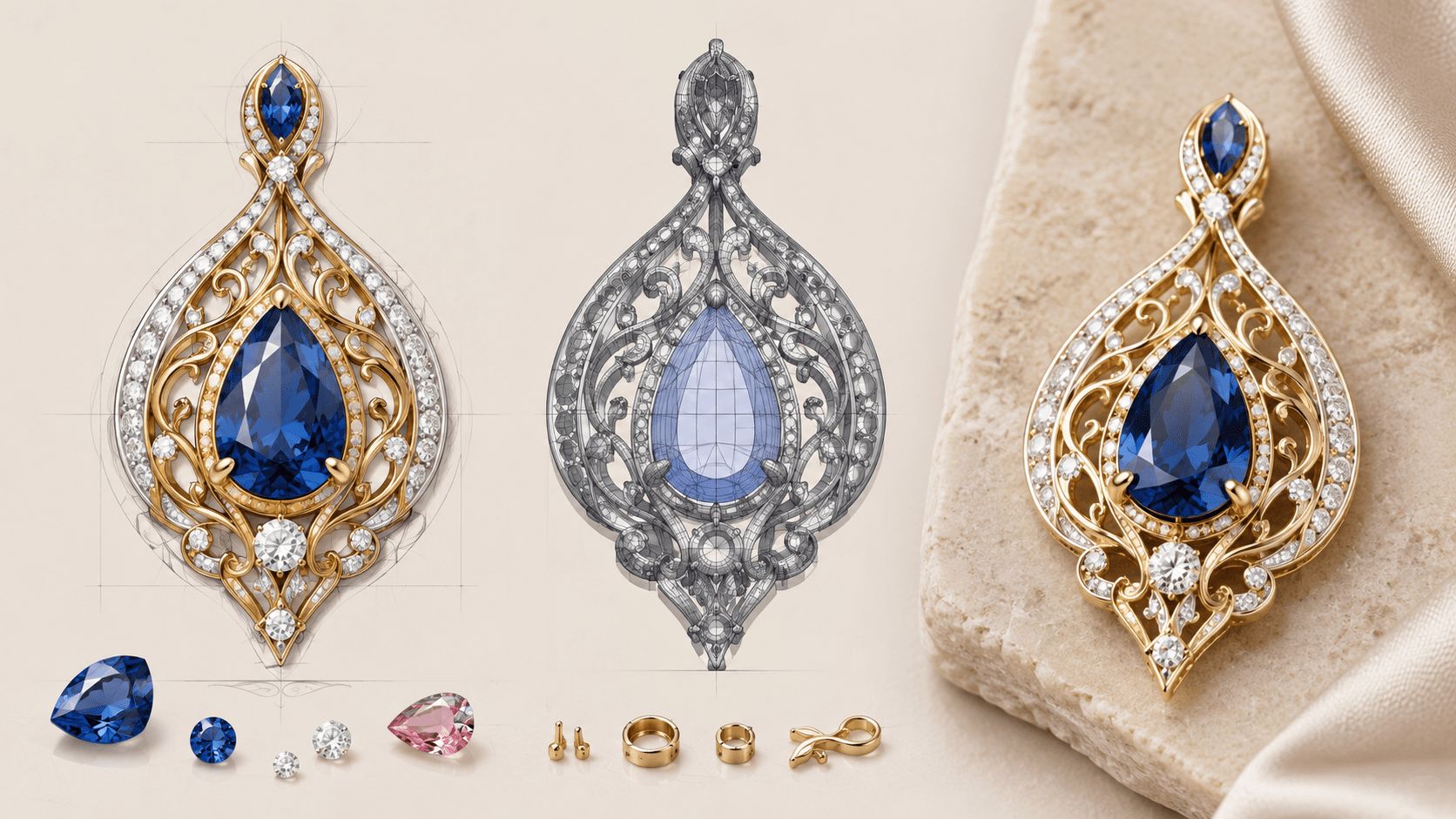
Step 2: Convert the AI Image Into a Production-Ready 3D Model
AI images are usually flat visual references. They are not production files.
To produce a jewelry item, the manufacturer needs to turn the image into a 3D model that can be used for manufacturing.
During this process, the designer or 3D modeler needs to plan:
- Product size
- Thickness
- Structure
- Stone setting method
- Stone sizes
- Connection points
- Polishing space
- Production process
This step requires real jewelry experience.
If the AI image is very complex, asymmetrical, or full of tiny details, trying to copy it exactly can take a lot of time and cost. The final production version may also look different from the original AI image.
Jewelry sellers need to understand this clearly:
AI image generation is only the first step. Real jewelry production starts with a workable structure.
Step 3: Adjust the Design Based on Budget
AI image tools do not control cost.
They may generate designs with large metal areas, dense gemstones, complex stone combinations, layered structures, carved textures, and many decorative details.
These designs may look beautiful, but the production cost can be very high.
For example, a brooch may look impressive in an AI image. But if it requires a heavy structure, many stones, complex setting work, detailed polishing, and custom modeling, the final cost may be far beyond the seller’s expectation.
That is why AI jewelry design must be reviewed with a practical question:
Can this design be produced within the seller’s budget and target selling price?
If the budget is limited, the manufacturer may need to help the seller decide:
- Which elements must be kept
- Which structures can be simplified
- Which stones can be replaced
- Whether the number of stones can be reduced
- Whether size or thickness can be adjusted
- Whether the material can be changed
- Whether a similar effect can be achieved with a more practical process
Budget does not simply limit creativity.
It helps the manufacturer find a more realistic production solution.
Step 4: Make a Sample to Verify the Real Result
Even after an AI image has been converted into a 3D model, the final product may still not look exactly like the AI image.
From a production point of view, an AI image often shows an idealized visual effect. Real jewelry production depends on real materials, real stones, real accessories, craftsmanship, and lighting conditions.
Final samples may differ from AI images in several ways:
- The stone color in the AI image may be visually enhanced, and the exact color may not exist in real materials.
- The stone shapes and sizes in the AI image may not be standard or easy to source.
- The chain, post, clasp, or other accessories shown in the AI image may not exist in the real supply chain.
- The metal shine, reflection, and brightness in the AI image may be visually strengthened.
- The fire, transparency, and brightness of stones in the AI image may look more ideal than real stones.
- The material combinations shown in the AI image may need to be adjusted for stability and production.
- The final proportion and decorative details may need to be changed based on real production and sample results.
This is why sample making is important.
The purpose of a sample is not only to check whether the design can be made. It is also to check whether the real materials, real stones, real accessories, and real craftsmanship create a result that matches the seller’s product positioning and customer expectations.
For jewelry sellers, it is important to understand that there is always a natural difference between an AI image and a physical jewelry product.
AI images show an idealized visual concept. Samples show the real product result.
A more realistic process is:
AI concept image → production feasibility review → structure and process adjustment → 3D modeling → cost evaluation → sample making → sample approval → bulk or made-to-order production
How Jewepiter Evaluates an AI Jewelry Image
When Jewepiter reviews an AI-generated jewelry image, we usually focus on three main points.
1. Is the Structure Reasonable?
Structure is one of the most important factors.
Jewelry is not only about appearance. It also needs to support stones, hold its shape, and remain stable during long-term use.
If an AI jewelry image has the following problems, the design may need to be adjusted:
- Connection points are too thin
- Pendant balance is unstable
- Ring structure is too thin
- Earrings are too heavy
- Stones do not have secure settings
- Decorative details are floating
- Patterns do not have clear boundaries
- The product lacks structural support
If the structure is not reasonable, the design cannot be produced directly.
2. Are the Stones and Accessories Standard?
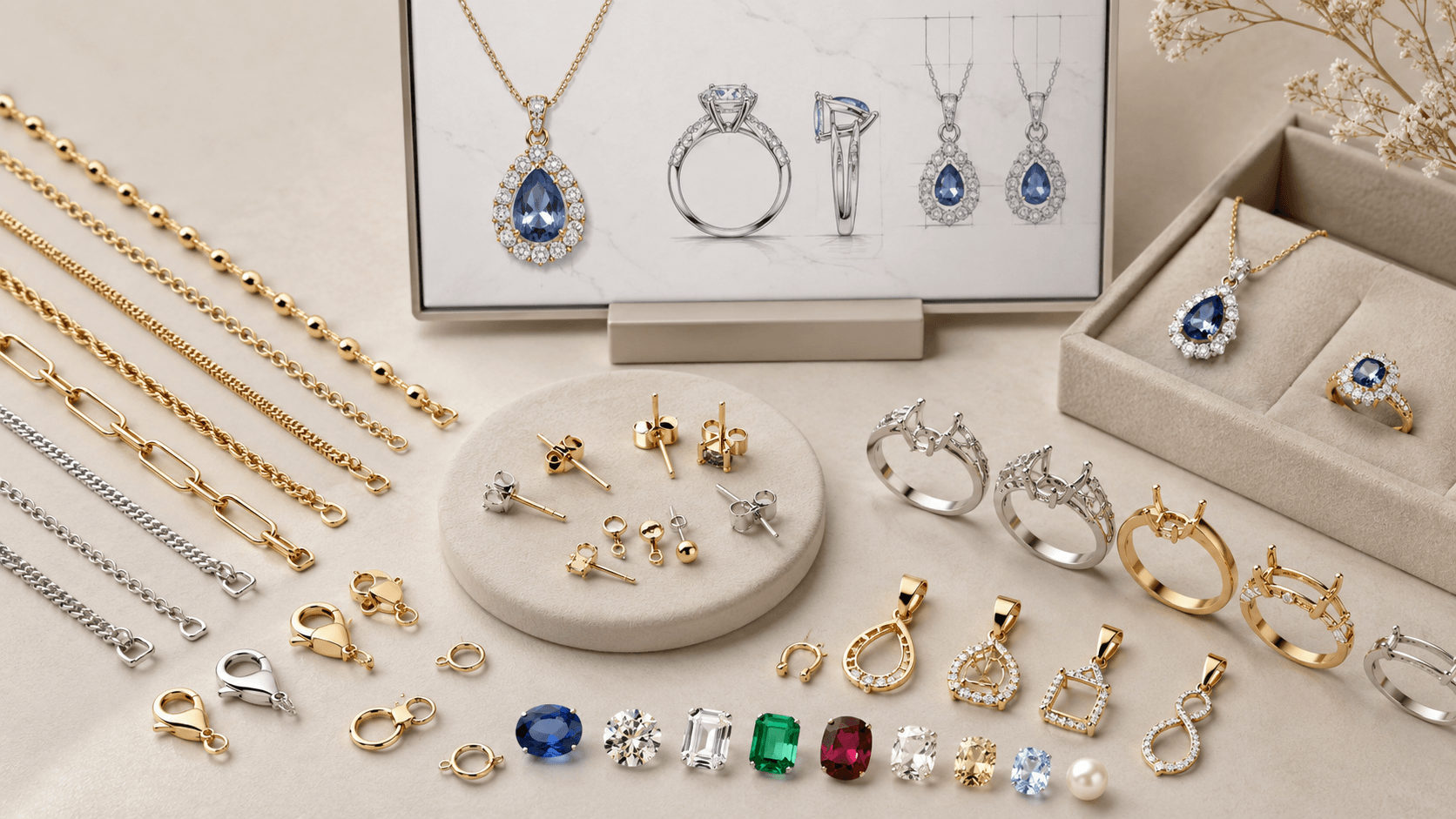
AI may generate stone shapes, stone sizes, chains, clasps, posts, and connectors that do not exist as standard components in the real supply chain.
For example:
- The stone shape may be unusual and difficult to source.
- Stone sizes may be inconsistent and hard to match.
- The chain may look good in the AI image, but there may be no same style available.
- Ear posts, clasps, or connectors may not be standard parts.
- Some decorative elements may look possible in the image but may not exist as real components.
For jewelry sellers, these details affect production cost, lead time, and final appearance.
If stones or accessories are not standard, they may need to be custom-made. This can increase both cost and production time.
This is especially important for necklaces, earrings, and bracelets. The chains, posts, clasps, and connection methods shown in an AI image may not be available exactly as shown.
If the accessories cannot be matched, the final product may look different from the AI image.
3. Can the Customer Accept the Cost?
AI does not think about cost.
It may create designs with many stones, complex stone combinations, dense settings, and highly detailed metalwork.
These designs are not always impossible to make, but they can be expensive.
When Jewepiter evaluates an AI jewelry image, we also consider whether the customer can accept the production cost.
A good production design is not only something that can be made. It also needs to make sense for the seller’s target price and market positioning.
If the final cost is too high for the target market, the design may not be suitable as a product for sale, even if it is technically possible to produce.
What Types of AI Jewelry Images Are Hard to Produce?
AI image generation is fast and visually impressive. But many AI jewelry images still face one practical problem:
The idea looks perfect, but real production is more complicated.
The following types of AI jewelry images are often difficult to produce directly.
1. Beautiful Images With Very High Production Cost
Some AI jewelry images look extremely luxurious, with complex structures, large metal areas, many stones, layered decoration, and rich details.
These designs are not always impossible to make.
But they may cost much more than expected.
For jewelry sellers, if the target customers have a limited budget, these images may not be suitable for direct product development.
AI does not evaluate material cost, stone cost, labor cost, or market pricing. Sellers should not be attracted only by the visual effect.
2. Beautiful at First Look, Messy in Detail
Some AI jewelry images look good from a distance, but the details become unclear when viewed closely.
Common problems include:
- Merged patterns
- Broken lines
- Irregular stone shapes
- Unclear structure boundaries
- Decorations without logic
- Multiple unexplained layers in one area
- Front view looks good, but side structure does not work
Images like this cannot usually be sent directly to production.
Unless the design is reorganized, the lines are clarified, the structure is defined, and the stone sizes are standardized, the image can only be used as inspiration.
It cannot be used as a production design.
3. Accessories That Cannot Be Found in the Real Supply Chain
AI may generate earrings, necklaces, or bracelets that look complete, but the accessories in the image may not exist in real production.
For example:
- Special chain styles
- Unusual ear posts
- Special clasps
- Irregular connectors
- Non-standard stone settings
- Components that look reasonable in the image but do not exist as real parts
If these accessories cannot be sourced, they may need to be custom-made. This increases cost and production time.
Jewelry sellers should not only look at the overall image effect. They also need to consider whether the materials and components can be found or produced in the real supply chain.
4. Unstable Material or Structure
AI does not understand material strength or stress points.
Some jewelry designs may look thin, delicate, and elegant in an image, but in real production they may be too weak, too fragile, or too easy to bend.
This is especially important for rings, earrings, brooches, pendant connection points, and stone settings.
If the structure is not stable enough, the product may not be suitable for sale, even if it can be made once. It may create after-sales problems later.
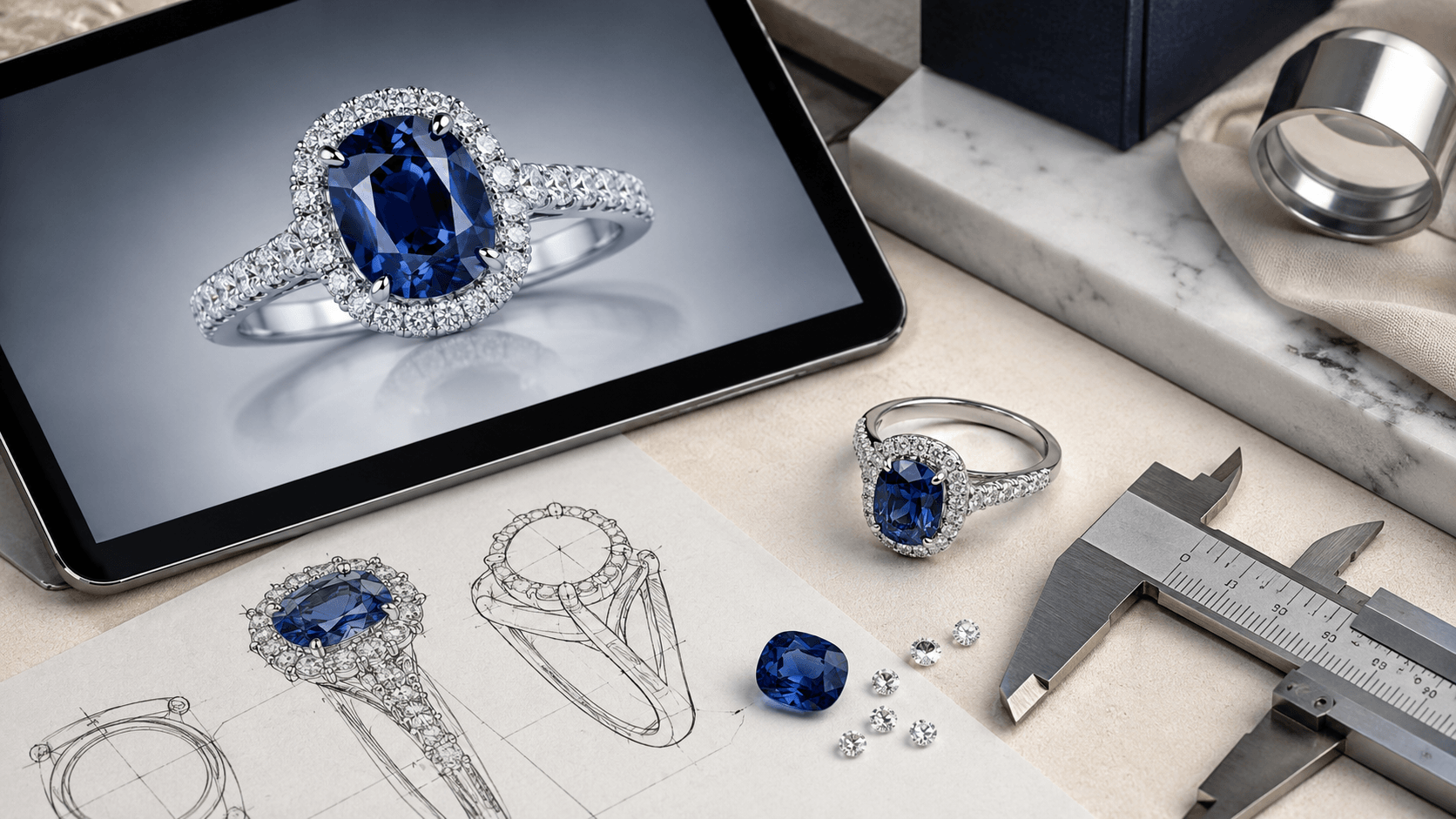
What Information Should Sellers Provide Before Production?
If jewelry sellers want to turn AI-generated images into real jewelry products, they should provide more information before asking for production.
Sending only one AI image is usually not enough.
1. Material
The same design can look similar but have very different costs and production methods depending on the material.
For example, the same ring design may be produced in:
- Brass
- 925 sterling silver
- 9K gold
- 10K gold
- 14K gold
- 18K gold
The appearance may be similar, but the cost, weight, production method, durability, and market positioning can be very different.
That is why sellers should explain the preferred material before production evaluation.
2. Budget
Budget is very important.
Many AI images look beautiful, but if the design requires expensive materials, many stones, and complex setting work, the final cost can become very high.
If the seller can provide a budget range, the manufacturer can give more realistic suggestions.
For example, the manufacturer may suggest:
- Reducing the number of stones
- Adjusting the size
- Reducing unnecessary thickness
- Replacing certain stones
- Changing the material
- Simplifying some details
- Using a more practical production structure
Budget does not mean giving up the design.
It helps the manufacturer find a more realistic way to produce the design.
3. The Design Effect You Want to Keep
Sellers should explain what they like most about the AI image.
For example:
- Which part of the image must be kept?
- Which details can be adjusted?
- Is the overall style more important than exact details?
- Is the seller open to manufacturer redesign?
- Is the product for sampling, selling, or presentation?
Not every detail in an AI image can or should be kept.
If the seller explains the desired effect clearly, the manufacturer can adjust the design more effectively instead of blindly trying to copy the image exactly.
AI Should Be a Tool, Not a Limitation
The greatest value of AI is that it helps jewelry sellers express ideas faster.
It allows sellers to explore styles, elements, colors, and visual directions more easily.
But strong jewelry sellers should not be limited by AI images.
If a seller already has a clear design concept, brand style, and customer positioning, AI should help express those ideas faster. It should not force the seller to follow a random image generated by AI.
A better way to use AI is:
Start with your own design concept, then use AI to express it visually. Do not let a random AI image decide your product direction.
Sometimes, certain details in an AI image may not be suitable for production, but the design idea behind the image can still be valuable.
A manufacturer can help turn that idea into a more realistic jewelry product with better structure, material choices, and production methods.
How Jewepiter Helps Sellers Turn AI Images Into Production-Ready Jewelry
If you are a jewelry seller using AI-generated jewelry images, Jewepiter recommends treating AI images as inspiration references, not final production standards.
Jewepiter can help jewelry sellers evaluate AI images from a manufacturer production perspective, including:
- Whether the structure is reasonable
- Whether the material is suitable
- Whether stones and accessories are standard
- Whether the cost matches the seller’s budget
- Whether the visual effect can be achieved with real materials
- Which details need adjustment
- Whether a new production-ready design drawing is needed
- Whether the design is suitable for sampling or production
If the AI image cannot be copied exactly, Jewepiter can help redesign the product based on the effect the seller wants to achieve.
Our goal is not simply to copy an AI image.
Our goal is to help jewelry sellers turn the design idea behind the image into a real jewelry product that can be produced, sold, and developed for long-term business.
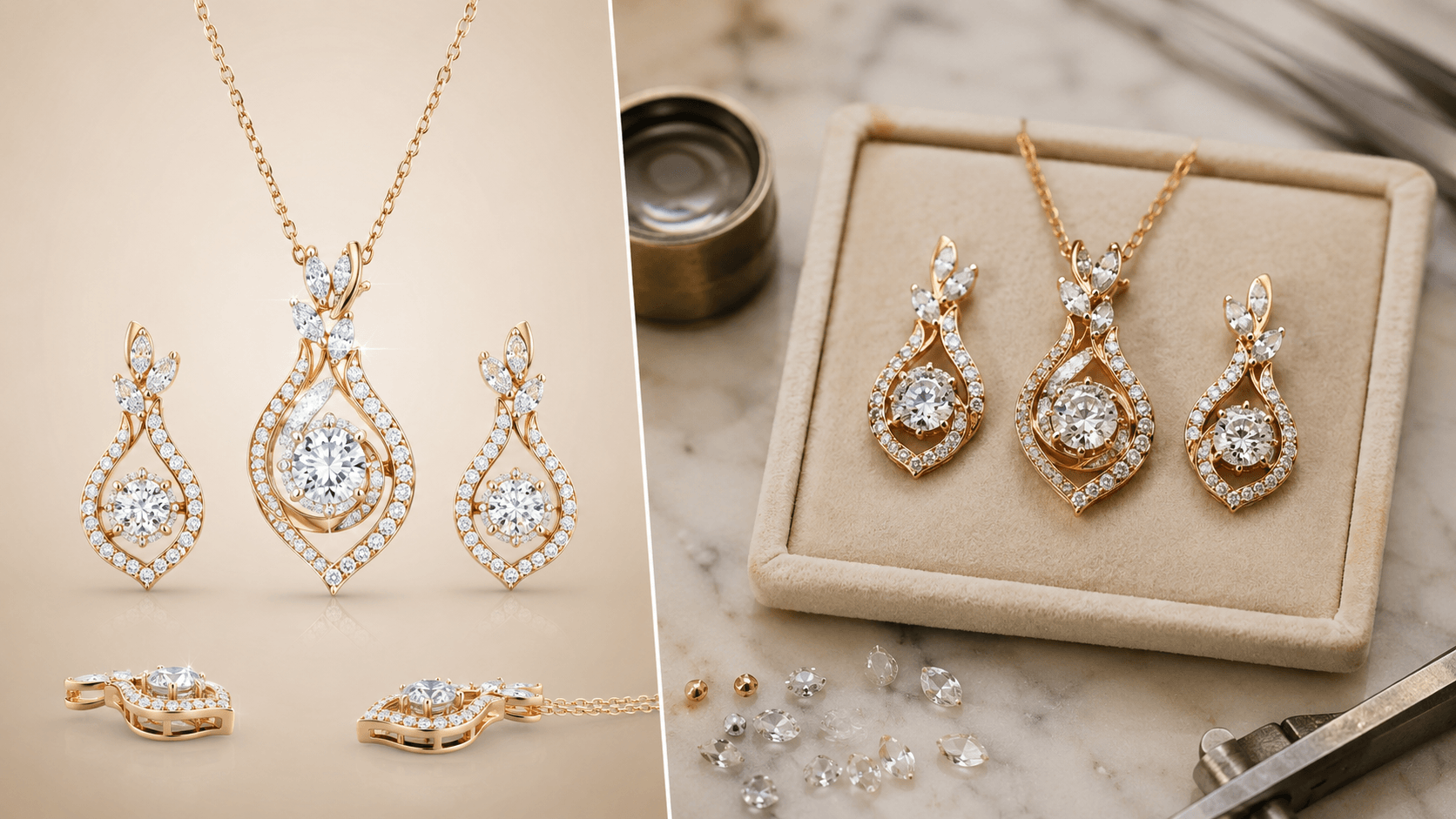
AI Jewelry Design FAQ
Can AI-generated jewelry images be produced directly?
In most cases, no. AI-generated jewelry images can be used as inspiration, but before production they need structure evaluation, craftsmanship review, 3D modeling, cost evaluation, and sample confirmation.
Why does a manufacturer say an AI jewelry image cannot be produced?
Because AI only creates visual effects. It does not consider jewelry structure, material strength, stone sizes, accessory sourcing, production process, or manufacturing cost.
Does an AI jewelry design need to be redrawn before production?
Often, yes. AI images are usually visual references. If the design is moving into production, the manufacturer or designer may need to reorganize the structure, material, dimensions, stones, and production details into a production-ready design.
Can I use an AI jewelry image to ask for a quote?
Yes, an AI image can be used as a reference for early communication. However, a more accurate quote usually requires details such as material, size, stones, craftsmanship, structure, and production method.
Will the final jewelry product look exactly like the AI image?
Not always. AI images are often visually enhanced. The final product may be affected by structure, material, craftsmanship, stones, accessories, shine, brightness, and budget.
What AI jewelry designs are hardest to produce?
Designs with complex structures, unclear details, dense stone setting, large decorative metal areas, unusual stones, unrealistic connections, or accessories that cannot be sourced are usually harder to produce.
What is AI best used for in jewelry product development?
AI is best used for inspiration, style exploration, element combinations, product series concepts, and early communication. It should not be used as the final production drawing.
What should jewelry sellers prepare before sending an AI image to a manufacturer?
Sellers should provide material, budget, the design effect they want to keep, which parts can be adjusted, whether redesign is acceptable, and whether the product is for sampling or production.
Conclusion: AI Is an Inspiration Tool, Not a Final Production Plan
AI can help jewelry sellers generate ideas faster and express design concepts more easily.
But an AI-generated jewelry image is not the same as a production-ready jewelry design.
What determines whether a jewelry product can be produced is not only how beautiful the image looks. It depends on structure, material, stones, accessories, cost, craftsmanship, and manufacturer production experience.
For jewelry sellers, the best way to use AI is not to be limited by AI-generated images. Instead, AI should help sellers express their own design concepts more quickly.
AI should be a tool for jewelry sellers, not a limitation.
If you have AI-generated jewelry images, reference images, hand sketches, or product ideas, you can send them to Jewepiter. We can help evaluate production feasibility, structure, cost, material suitability, and whether the design needs to be adjusted into a more production-ready jewelry design.


